中文

HIT Media (Text: Kan Simiao; Photos: HIT Youth League Committee)
Harbin Institute of Technology (HIT) recently expanded its aerospace science education initiative to 27 schools across 20 volunteer teaching sites in Shanxi, Inner Mongolia, Guangxi, Sichuan, Yunnan, Xizang, Qinghai, and Xinjiang.
Members of the university's Graduate Student Volunteer Teaching Team drew on HIT's aerospace education book series to deliver engaging lectures on aerospace science to more than 3,000 students and create interactive, hands-on learning experiences.
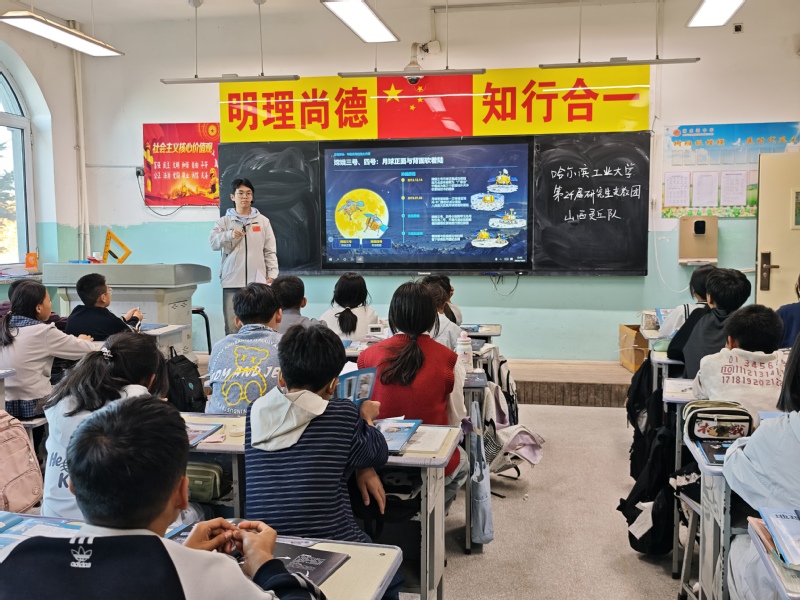
HIT holds an aerospace science lecture at Luoshuihe Middle School in Shanxi. [Photo/hit.edu.cn]
 HIT
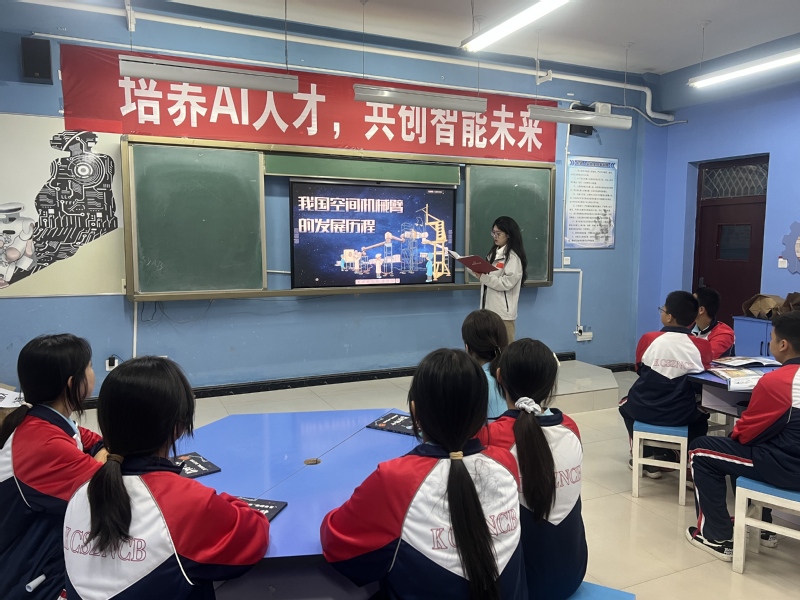
HIT holds an aerospace science lecture at Kuqa No 3 Middle School in Xinjiang. [Photo/hit.edu.cn]
 HIT
To date, three titles have been published in HIT's integrated-media aerospace education book series: The Astronaut's Essential Assistant: A Small Robotic Arm; The Space Adventures of the Yutu and Zhurong Rovers; and Exploring Lunar Soil: The Story of China's Lunar Sample Collection. Building on HIT's longstanding strengths in aerospace and its experience in major national strategic technologies and engineering projects, the initiative has developed an integrated bilingual outreach system combining science education books, aerospace exhibition venues, and AI-powered multimedia videos.
Volunteer teaching teams guided students as they explored the books in small groups and delivered themed lectures on aerospace science. Through the Metaverse Virtual Exhibition Hall, students explored virtual environments featuring bases on the Moon and Mars, using interactive 3D scenes and related technologies. They also took part in exploratory activities, including interactive quizzes with AI agents and simulations of rover route planning.
Students explore the virtual exhibition at a high school in Jinxiu Yao autonomous county, Guangxi. [Photo/hit.edu.cn]
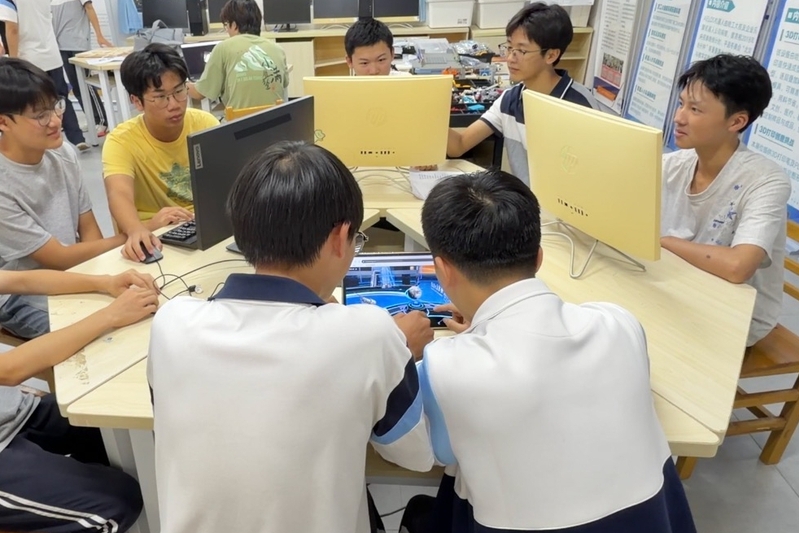 Students explore the virtual exhibition at a high school in Jinxiu Yao autonomous county, Guangxi. [Photo/hit.edu.cn]
Students explore the virtual exhibition at Huaping Central Middle School in Yunnan. [Photo/hit.edu.cn]
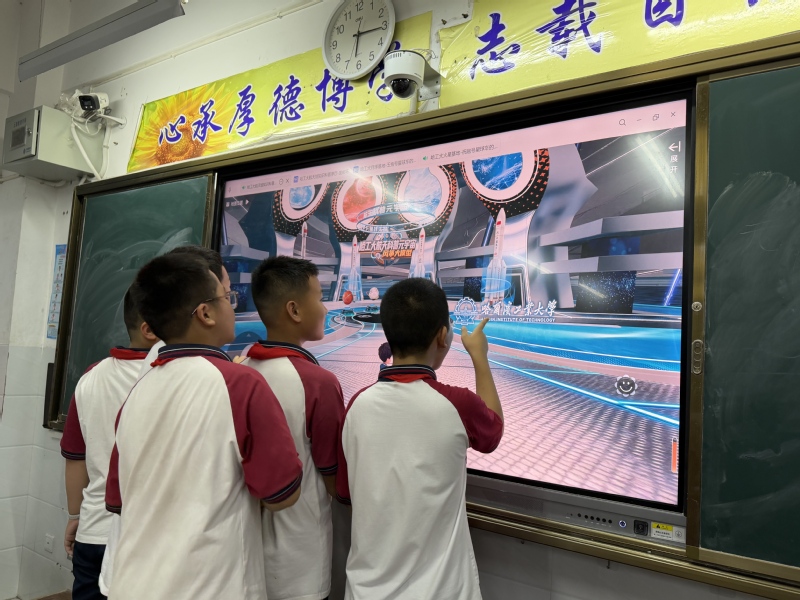 Students explore the virtual exhibition at Huaping Central Middle School in Yunnan. [Photo/hit.edu.cn]
Students discuss the books at Zhaoping Middle School in Guangxi. [Photo/hit.edu.cn]
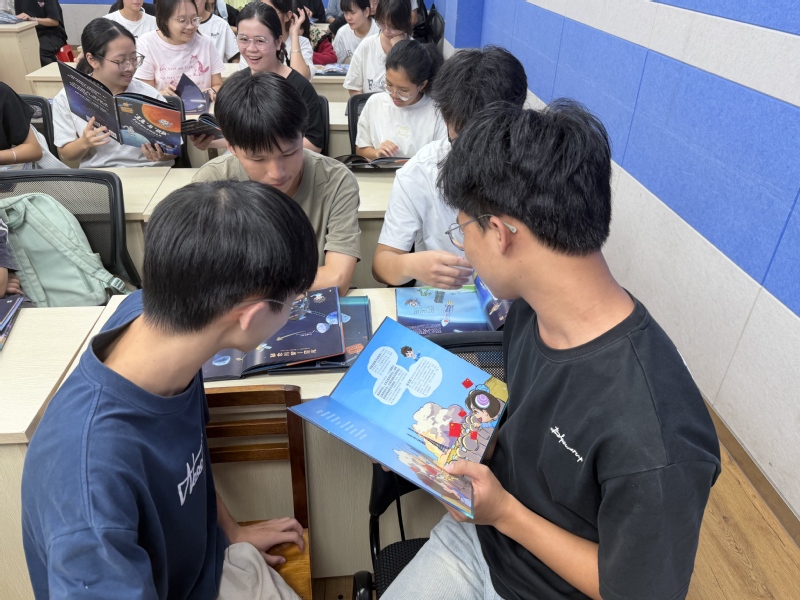 Students discuss the books at Zhaoping Middle School in Guangxi. [Photo/hit.edu.cn]
Students read the books at Chamdo No 1 Senior High School in Xizang. [Photo/hit.edu.cn]
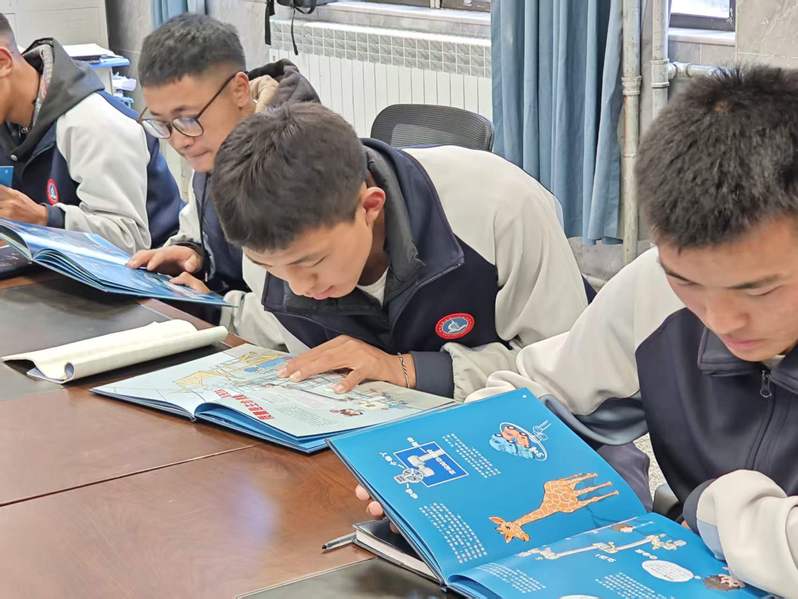 Students read the books at Chamdo No 1 Senior High School in Xizang. [Photo/hit.edu.cn]
These teaching teams pair cutting-edge science and technology with educational support that strengthens students' knowledge and aspirations, inspiring and encouraging them to pursue their ambitions.
The teams have also established modern laboratories focused on artificial intelligence and robotics at schools in communities such as Jinxiu in Guangxi and Kuqa in Xinjiang, as well as student science and technology clubs, including model aircraft and astronomy clubs, with regularly organized activities such as face-to-face with academicians talks and online science classes. Over the years, students at the schools have won more than 100 awards in national science and technology competitions.
The aerospace education book series was developed through collaboration among experts and science outreach resources from the State Key Laboratory of Robotics and Systems, the State Key Laboratory of Aerospace Mechanisms, the State Key Laboratory of Advanced Inorganic Fibers and Composites, the News and Publicity Center of the China National Space Administration, the Heilongjiang station of China Media Group, and other organizations.
The project helps fill a gap in China's aerospace science education resources by bringing together knowledge and expertise from across the field. Several academicians and other experts – including Luan Enjie, the first chief commander of China's lunar exploration program and a member of the Chinese Academy of Engineering – have offered messages of support and endorsed the series.
The series has received several awards, including the 2025 Heilongjiang Provincial Outstanding Reading Award for Social Science Outreach, first prize in the 2026 Heilongjiang Provincial Outstanding Science Education Book Awards, and recognition in the book category of the 2026 National High-Quality Science Outreach Works program. The accompanying videos won first prize in the 2026 Heilongjiang Provincial Science Outreach Short-Video Selection and Promotion Activity and received recognition in the video category of the 2026 National High-Quality Science Outreach Works program, among other honors.
Edited by: Shang Yankai
Reviewed by: Song Ling, Li Shoubin, Yang Wenyu