中文

The inauguration ceremony and academic forum for the United Nations Educational, Scientific and Cultural Organization (UNESCO) Chair on Science for Smart and Innovative Cities were held at Harbin Institute of Technology (HIT) on Oct 18.
Chen Qun, assistant director-general for Education of UNESCO, sent a congratulatory letter.
Qin Changwei, secretary-general of the Chinese National Commission for UNESCO; Zhao Yaqin, deputy director-general ofthe Heilongjiang Provincial Department of Education; Han Guoqing, deputy director-general of the Heilongjiang Provincial Department of Science and Technology; Xu Dongfeng, deputy director-general of the Heilongjiang Provincial Department of Housing and Urban-Rural Development; and Chen Rui, vice-president of HIT, delivered addresses.
Ge Siying, deputy secretary-general of the Chinese National Commission for UNESCO, and Academician Mei Hongyuan of HIT attended the event.
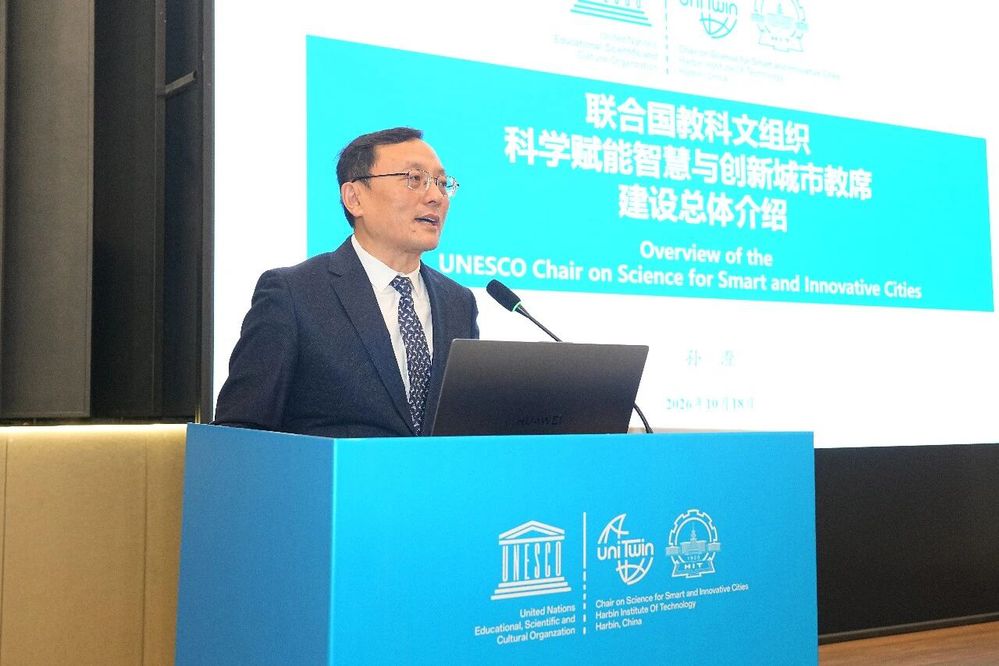
Sun Cheng, chairholder of the UNESCO Chair on Science for Smart and Innovative Cities and dean of the School of Architecture and Design at HIT, introduced the overall positioning, development goals and key tasks of the chair.
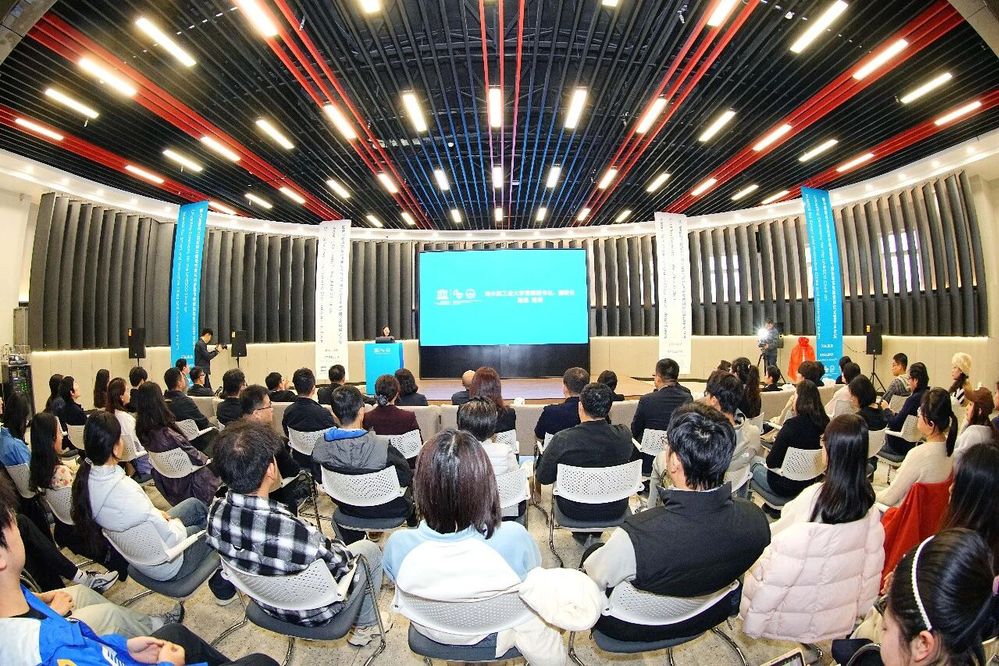
The inauguration ceremony takes place. [Photo/hit.edu.cn]
In her letter, Chen Qun stated that UNESCO's Education Sector will continue to follow and support the progress of this chair. She expects the chair to play an active role in building academic networks, sharing research outcomes and nurturing young talents, advancing the deep integration of artificial intelligence and urban science, facilitating global research and experience-sharing on urban governance, and enhancing cities' capacity for sustainable development.
The congratulatory letter from Chen Qun is read at the ceremony. [Photo/hit.edu.cn]
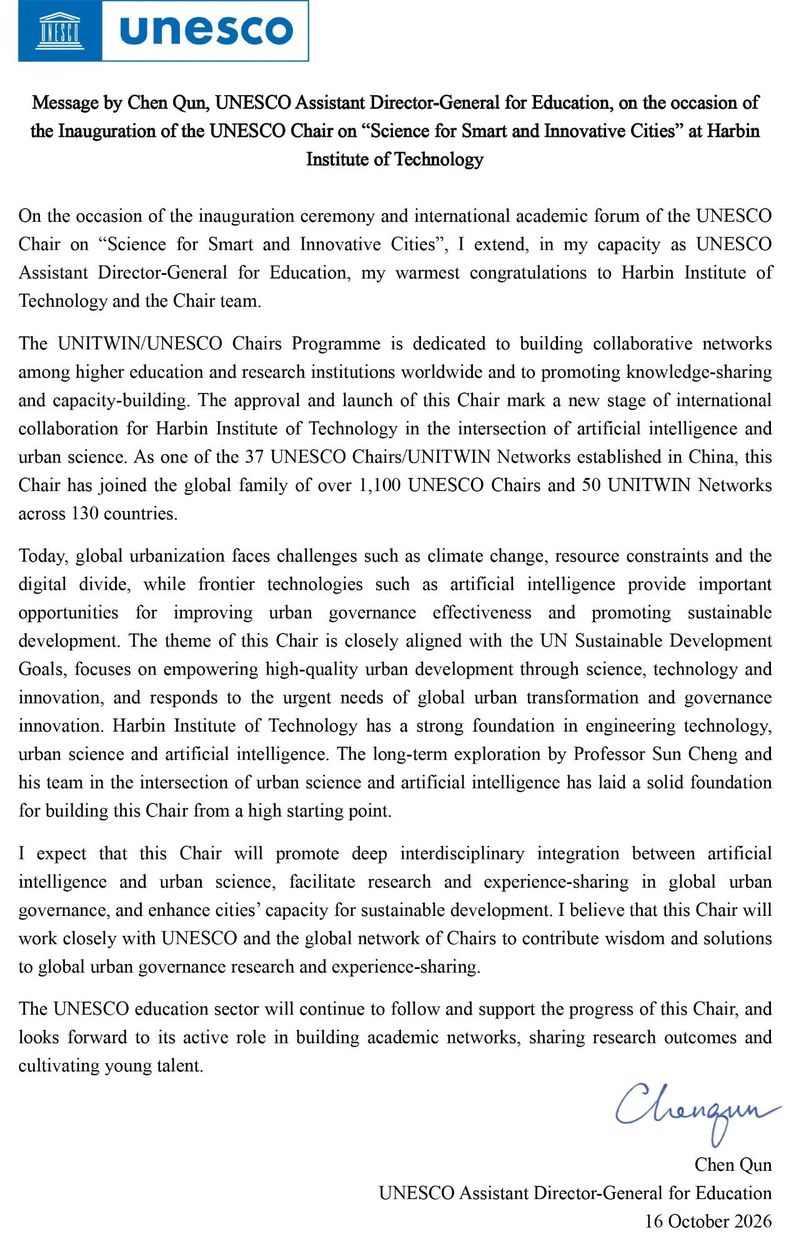 The congratulatory letter from Chen Qun is read
Qin remarked that the UNESCO Chair on Science for Smart and Innovative Cities at HIT will serve as an important platform for collaborative research and capacity building to foster innovative applications of emerging technologies such as artificial intelligence in urban regeneration and smart city development.
He expressed hopes that the chair will strengthen collaborative research, build a stronger talent team, develop its brand, strive to produce leading research results and cultivate professionals for international organizations.
Qin Changwei delivers remarks via video link. [Photo/hit.edu.cn]
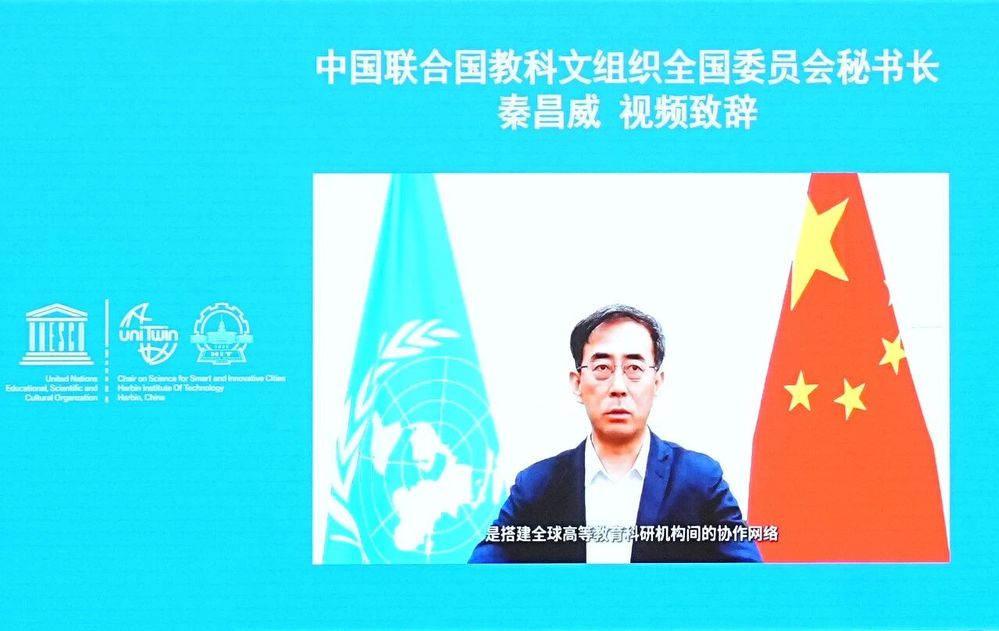 Qin Changwei delivers remarks via video link. [Photo/hit.edu.cn]
Zhao noted that the inauguration of the chair at HIT marks a new milestone for UNESCO Chairs in Northeast China. It serves as a symbol of Heilongjiang's continued efforts to open up education to the world and build a new hub for opening-up toward the north.
Zhao Yaqin delivers an address. [Photo/hit.edu.cn]
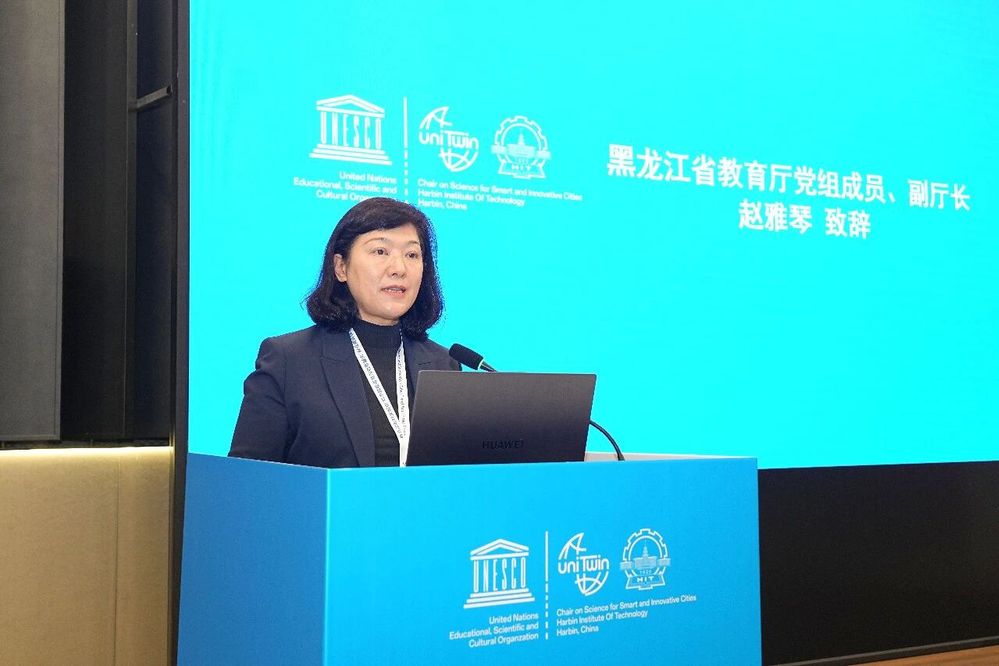 Zhao Yaqin delivers an address. [Photo/hit.edu.cn]
Han said the positioning of the chair aligns closely with Heilongjiang's current development needs. The Heilongjiang Provincial Department of Science and Technology will provide high-quality services and robust support for Sino-foreign scientific research cooperation. Experts are welcome to visit and exchange ideas at research institutions, tech enterprises and urban communities across Heilongjiang.
Han Guoqing delivers an address. [Photo/hit.edu.cn]
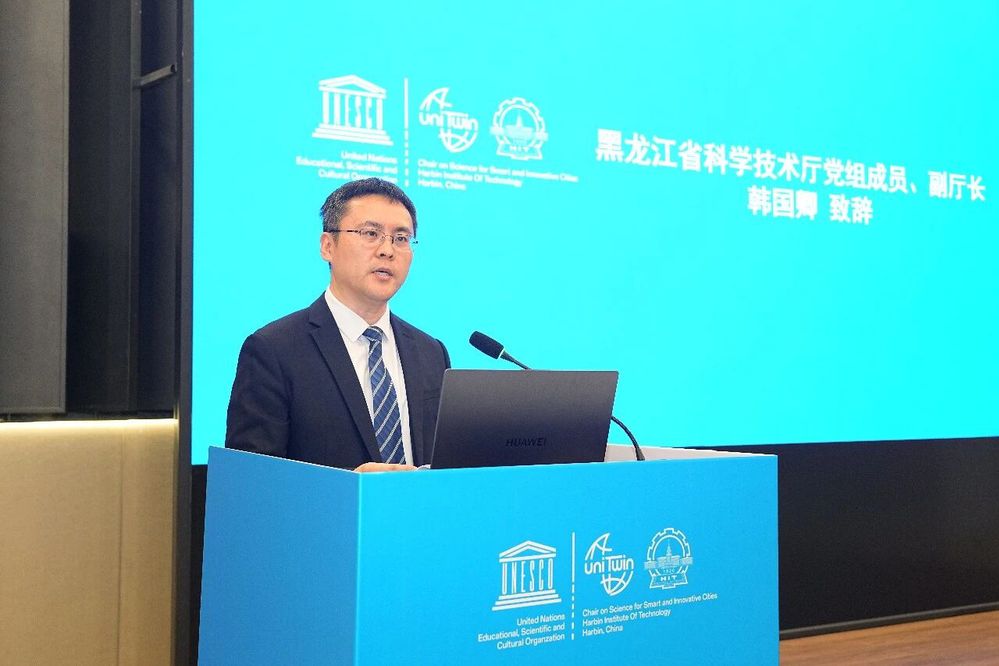 Han Guoqing delivers an address. [Photo/hit.edu.cn]
Xu commented that the chair helps create a cross-border research network. It acts as a vital channel for bringing advanced international urban development concepts to China, while also offering a platform for sharing China's practical experience in urban development globally. The Heilongjiang Provincial Department of Housing and Urban-Rural Development will support HIT in allocating resources for the delivery of the chair program.
He looks forward to joint efforts to deepen international scientific and educational cooperation, develop an integrated system covering scientific research, policy consultation and international education, and jointly explore development pathways for smart and innovative cities through mutual learning.
Xu Dongfeng delivers an address. [Photo/hit.edu.cn]
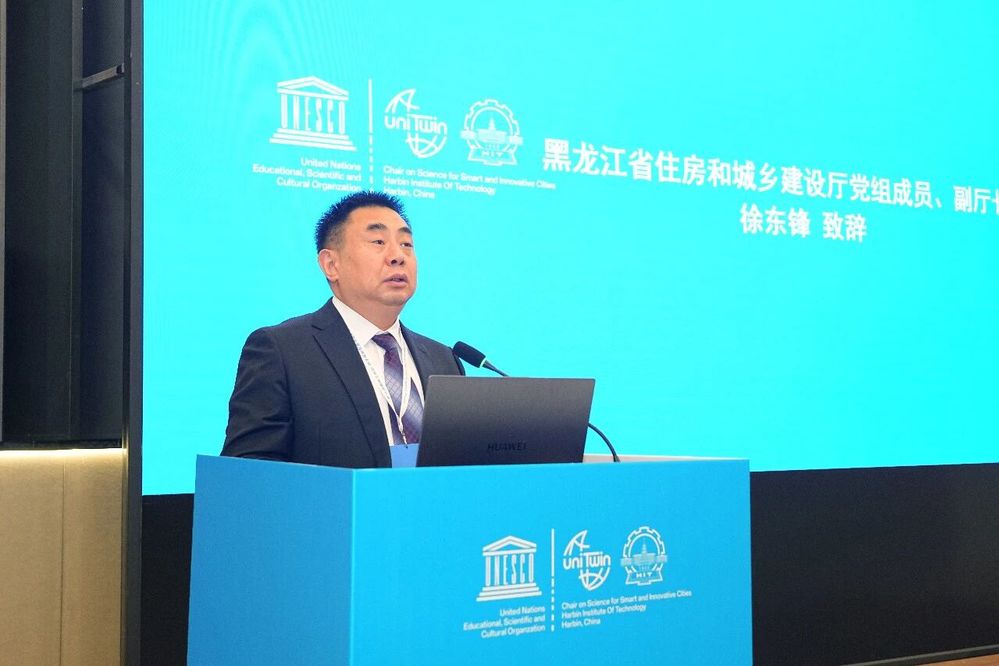 Xu Dongfeng delivers an address. [Photo/hit.edu.cn]
Chen Rui stated that the UNESCO Chairs will allow China to participate more in global education governance and serve national diplomatic priorities.
HIT will focus its work on the main theme of empowering high-quality urban development through science, technology and innovation, strengthen coordination, deepen international cooperation, prioritize the translation of research outcomes, develop the chair to high standards, and ensure its research outputs serve major national strategies.
Chen Rui delivers an address. [Photo/hit.edu.cn]
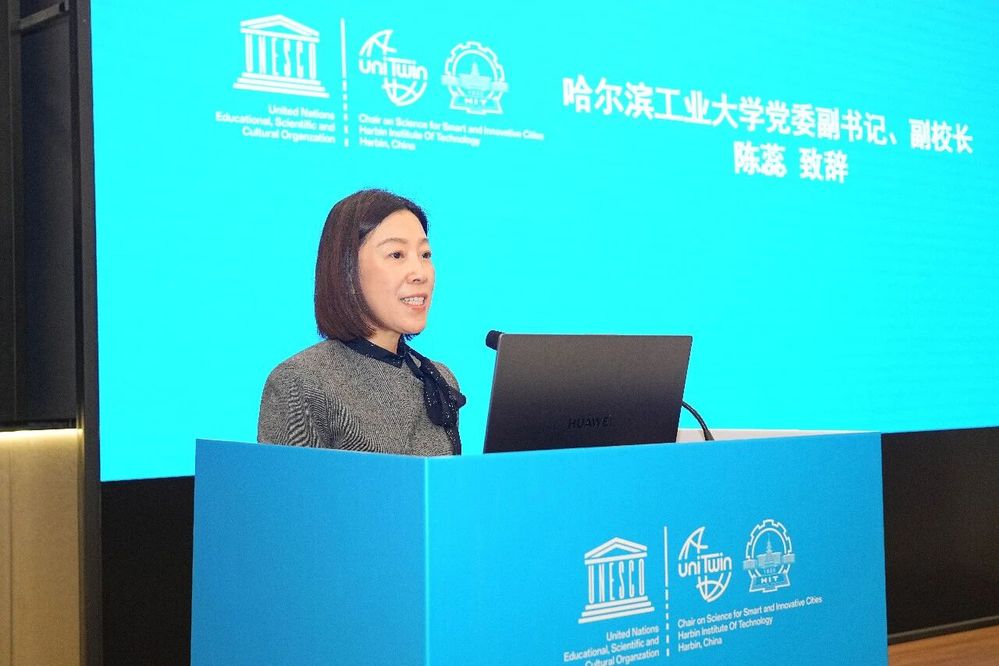 Chen Rui delivers an address. [Photo/hit.edu.cn]
The unveiling ceremony of the UNESCO Chair on Science for Smart and Innovative Cities. [Photo/hit.edu.cn]
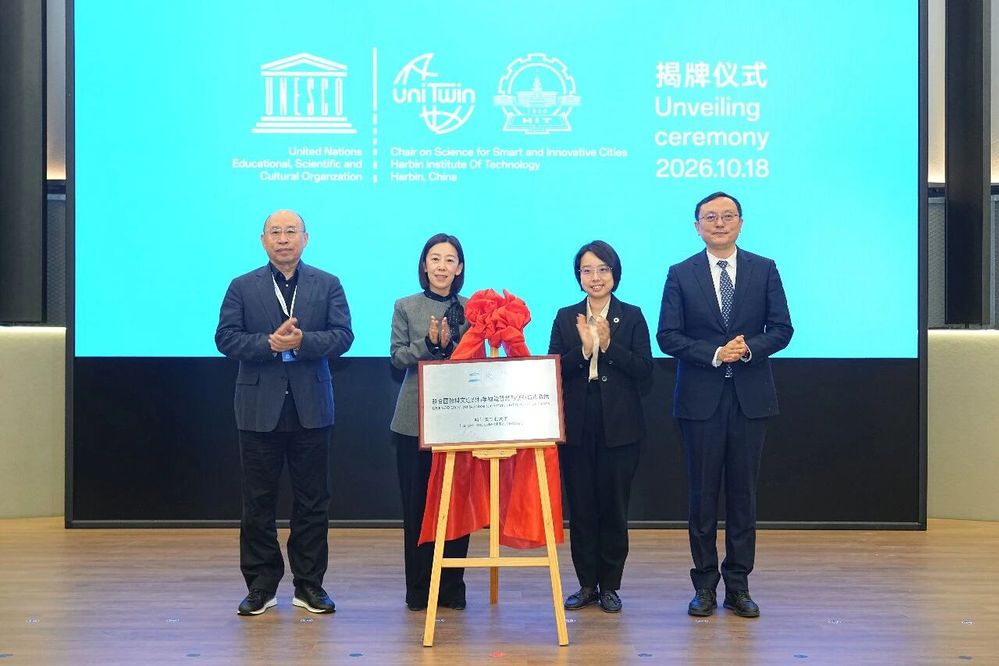 The unveiling ceremony of the UNESCO Chair on Science for Smart and Innovative Cities. [Photo/hit.edu.cn]
Sun Chenggives an overview of the chair. [Photo/hit.edu.cn]
Shen Zhao, deputy director of the International Affairs Division, HIT's Office of International Cooperation, presides over the ceremony and reads the congratulatory letter. [Photo/hit.edu.cn]
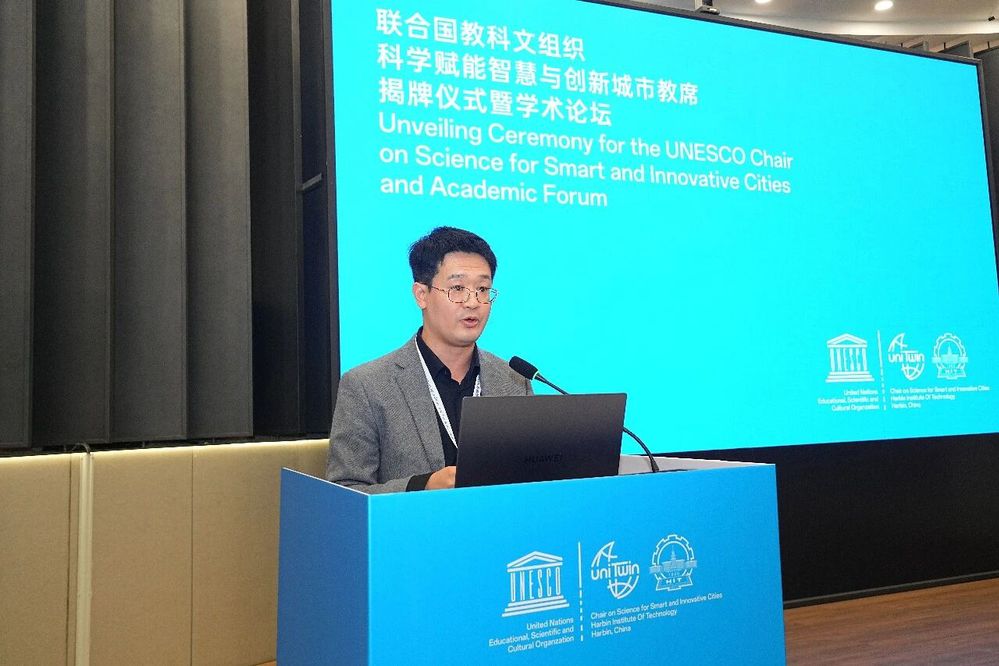 Shen Zhao, deputy director of the International Affairs Division, HIT'
The UNESCO Chairs (University Twinning and Networking program) is an initiative established through partnerships between higher education institutions/research bodies and UNESCO. Launched in 1992, the program has set up more than 1,100 UNESCO Chairs and over 50 UNITWIN projects across over 130 countries worldwide, forming an extensive and closely connected international academic network. China currently hosts 37 UNESCO Chairs and UNITWIN projects. In July 2026, HIT obtained official approval to establish the UNESCO Chair on Science for Smart and Innovative Cities.
Rui Zhenhua, chairholder of the UNESCO Chair Green Transition for Carbon Neutrality and Climate Change for the period of 2023 to 2027 at China University of Petroleum (Beijing); Zhou Yan, chairholder of the UNESCO Chair in Science and Technology Policy at Sun Yat-sen University; Huang He, representative of the UNESCO Chair on Heritage Conservation Planning and Sustainable Social Development at Tsinghua University; and Wang Huanhuan, representative of the UNESCO Chair on Artificial Intelligence in Education at Beijing Normal University, delivered keynote speeches at the academic forum. They shared cutting-edge progress in carbon neutrality, science and technology policy, heritage conservation, artificial intelligence and education.
Chairholders and representatives of the UNESCO Chairs deliver keynote speeches. [Photo/hit.edu.cn]
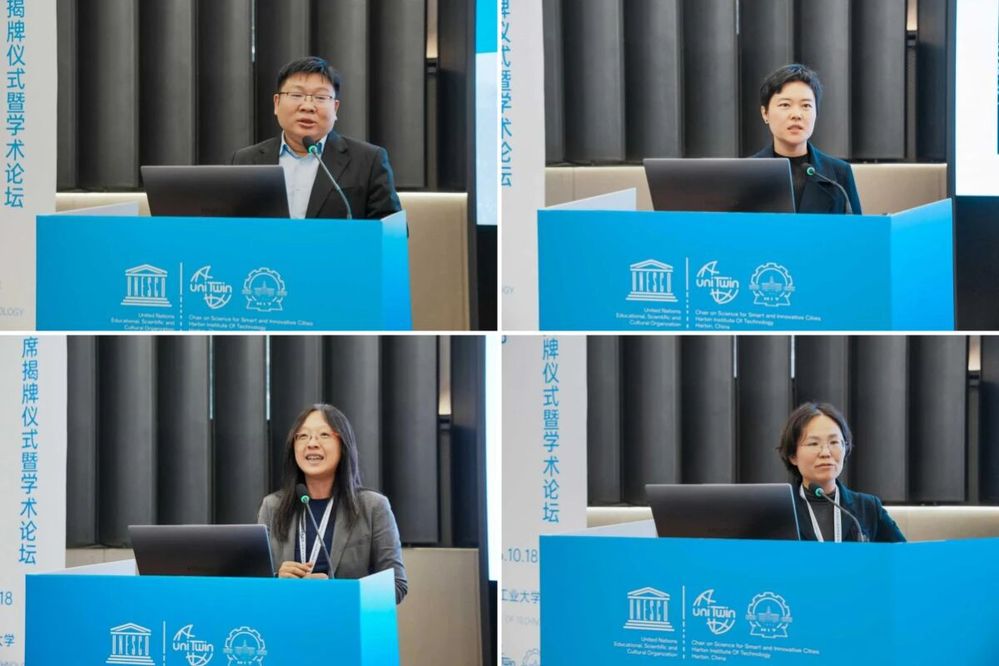 Chairholders and representatives of the UNESCO Chairs deliver keynote speeches. [Photo/hit.edu.cn]
Editor: Yang Wenyu